



Finding Selby Abbey’s Missing Monks
Our June update introduced one of our project’s four key origin stories: that of Gerard’s Herball and the role it will play in our development of a new monastic garden at Selby Abbey. Another of our key stories, however, is more difficult to grasp.This is the story of the Abbey between 1069 (when it was founded) and 1539 (its dissolution). During those years, it was home to a community of Benedictine monks. Visitors to the Abbey today often express an interest in finding out more about the monks and their daily lives, but there are frustratingly few resources available to help them.
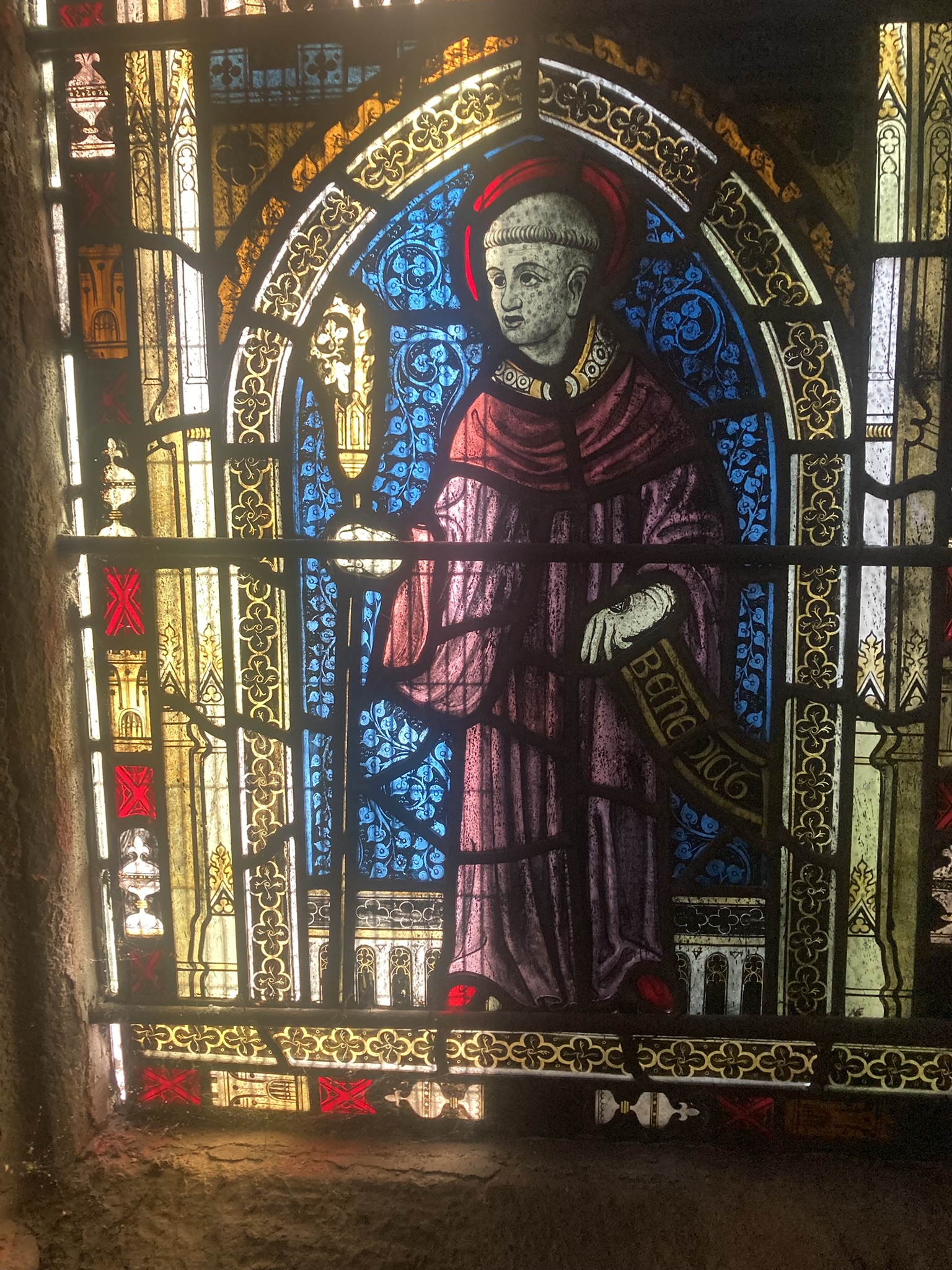
Image caption: The monks honoured the founder of their order, St Benedict, with a portrait in one corner of their great east window.
Of the complex of buildings that once stood in Selby, little has survived beyond the Abbey church, which has itself gone through many changes since the time of the monks. Nevertheless, there is a small number of features still visible within the Abbey that reflect a monastic way of life, dedicated to worship and separation from the outside world.
Four grave slabs belonging to Selby’s abbots, the heads of the abbey, are one obvious link with the monastic past. They can now be found inside the Abbey, at either side of the nave, at its west end. Abbeys like that of St Germain in Selby were all-male communities, ruled over by an abbot. The Benedictine Rule, which the monks in Selby followed, committed them to obey their abbot, as well as setting down instructions for how the abbot himself should behave:
‘…the abbot himself must fear God and keep the rule in everything he does; he can be sure beyond any doubt that he will have to give an account of all his judgements to God, the most just of judges.’
The Rule of St Benedict
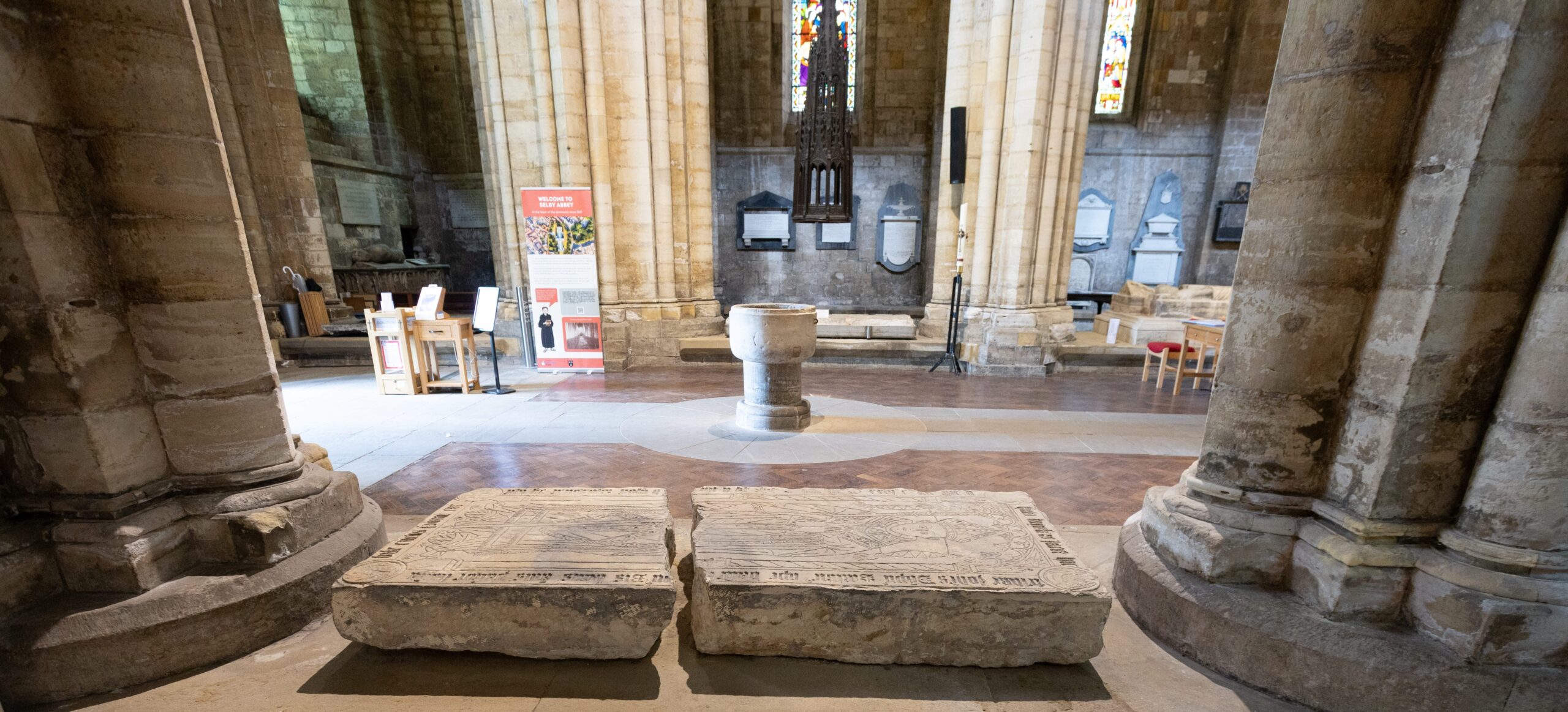
Image caption: The grave slab of John Barwic, Abbot of Selby Abbey 1522-26 (image by Duncan Lomax / Ravage Productions).
Also at the west end of the nave, in the wall above the abbey office, is a blocked doorway. The monks performed a round of services in the church at given points of the day and night. This doorway, it is believed, linked the church with the Abbey dormitory, so that the monks could access the church directly from their sleeping quarters for Matins, the service that took place between midnight and dawn. The dormitory has long gone, but probably matched the requirements set out by St Benedict:
‘The monks are to sleep in separate beds. They receive bedding as provided by the abbot, suitable to monastic life. If possible, all are to sleep in one place. […] A lamp must be kept burning in the room until morning. They sleep clothed […]. Thus the monks will always be ready to arise without delay when the signal is given; each will hasten to arrive at the Work of God before the others, yet with all dignity and decorum.’
The Rule of St Benedict
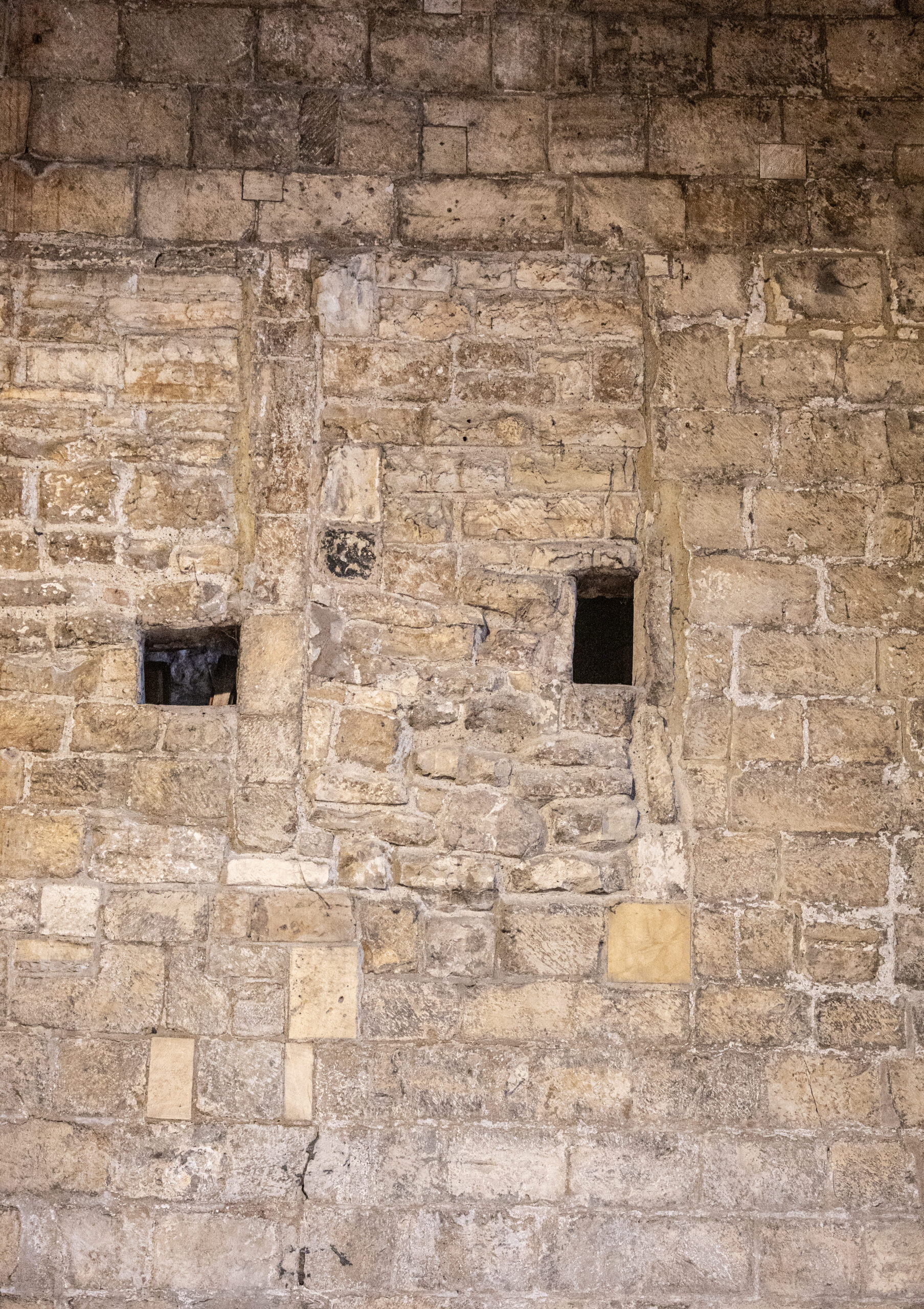
Image caption: The blocked doorway that may have led to the dormitory (image by Duncan Lomax / Ravage Productions).
Yet more doorways nearby are clues to the Abbey’s monastic past. It would have had a cloister: a square, green area to the south of the church surrounded by a covered walkway on at least three of its sides. The cloister was at the heart of the monastery, shut away from the outside world and connecting the various buildings that made up the Abbey. The monks may have read their books there, or used it as a space for teaching or meetings. Two doorways that would have led from the nave’s south aisle into the walkways on the east and west sides of the cloister can still be seen from the churchyard. There is also a blocked doorway in the same wall that served the same function at an earlier stage in the Abbey’s history, when the layout was different.
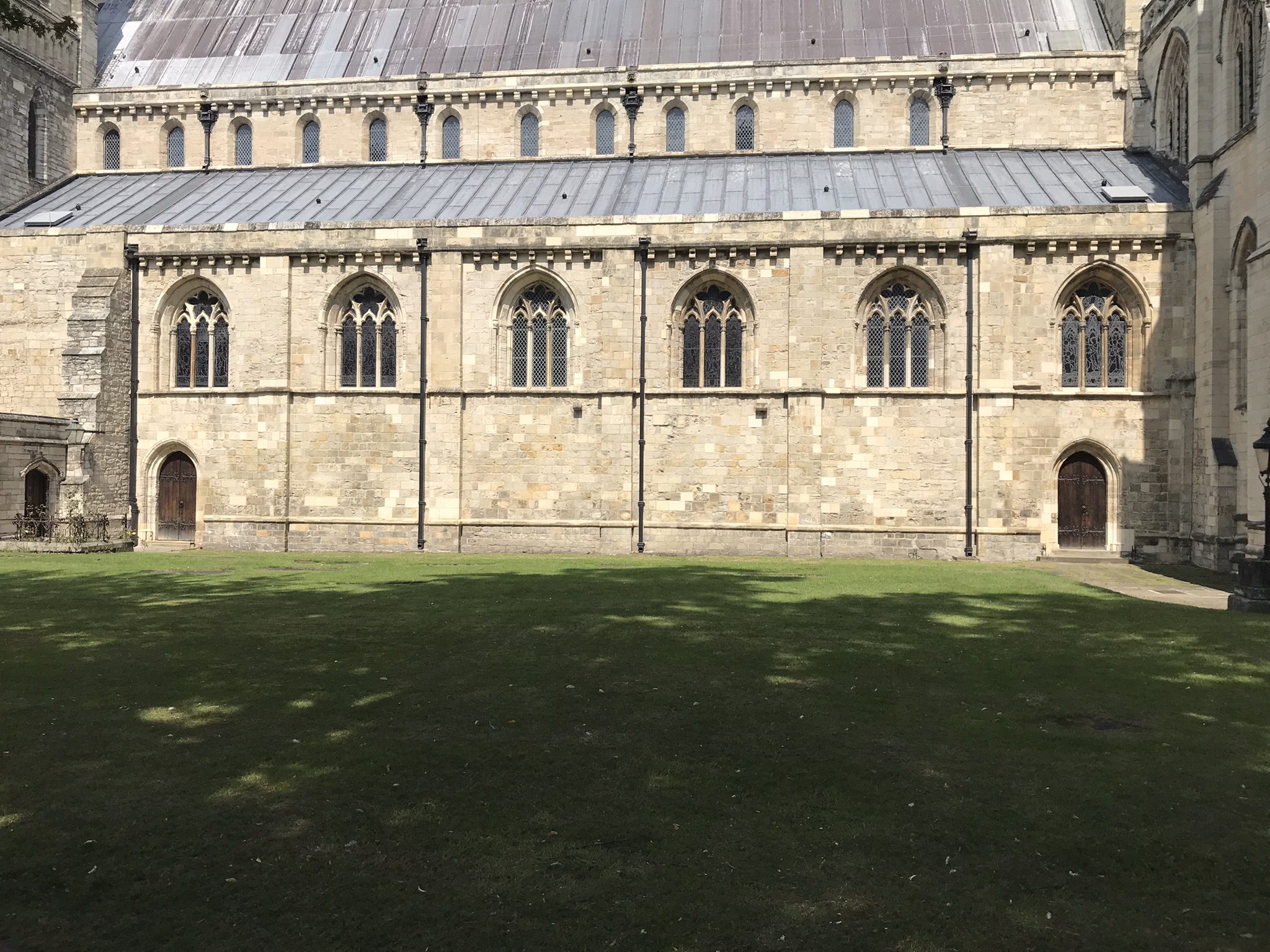
Image caption: The two doorways that connected the Abbey church to its cloister can be seen in the south wall of the nave.
The cloister garth, the open-air space at the centre of the cloister, may have been used for growing herbs of one sort or another, so this area is a fitting spot for our new monastic garden. To gather some additional inspiration, staff and volunteers visited Mount Grace Priory near Northallerton in July, to view its reconstructed monastic cell and adjoining garden.
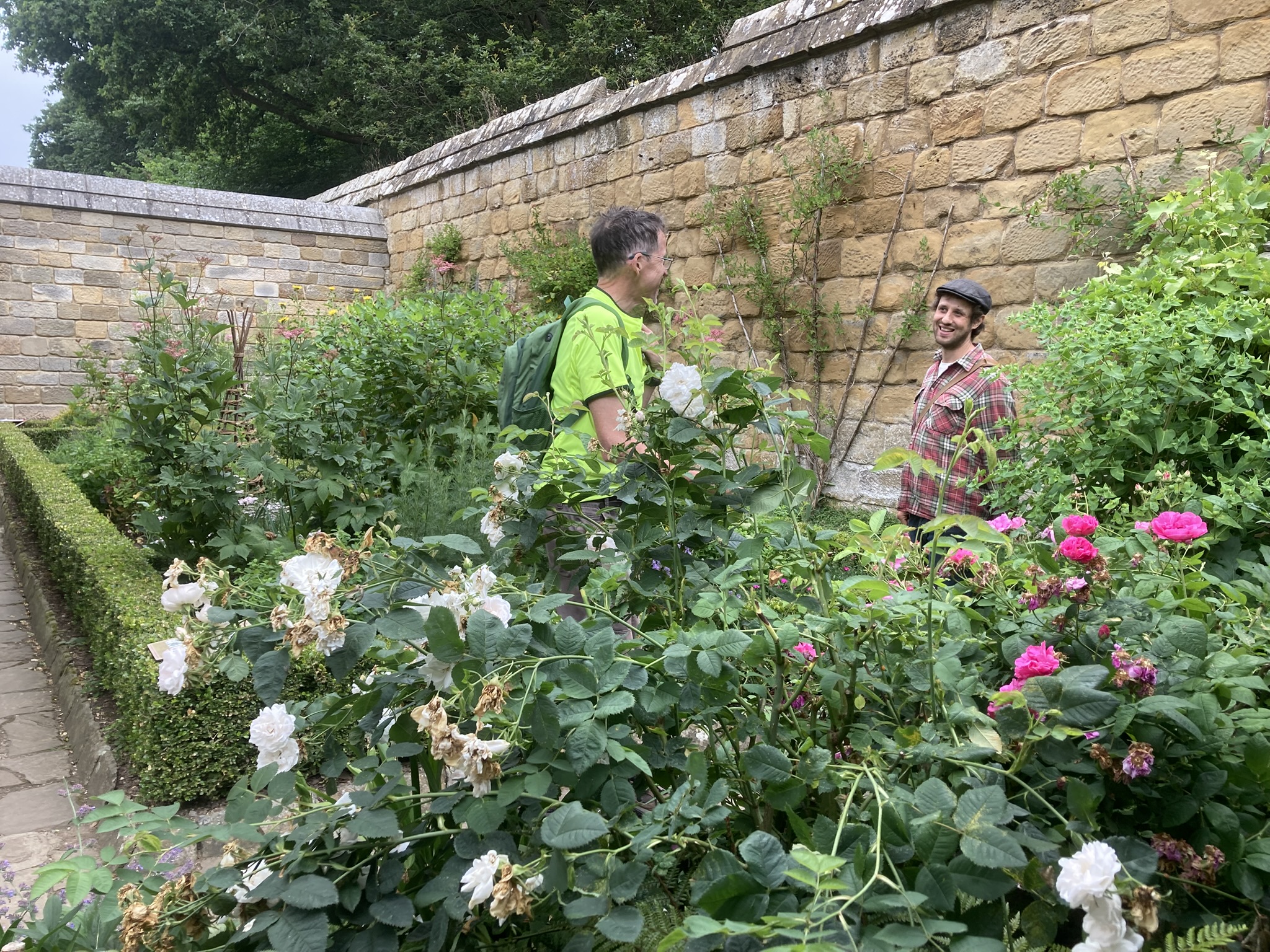
Image caption: Selby Abbey staff and volunteers at Mount Grace Priory.
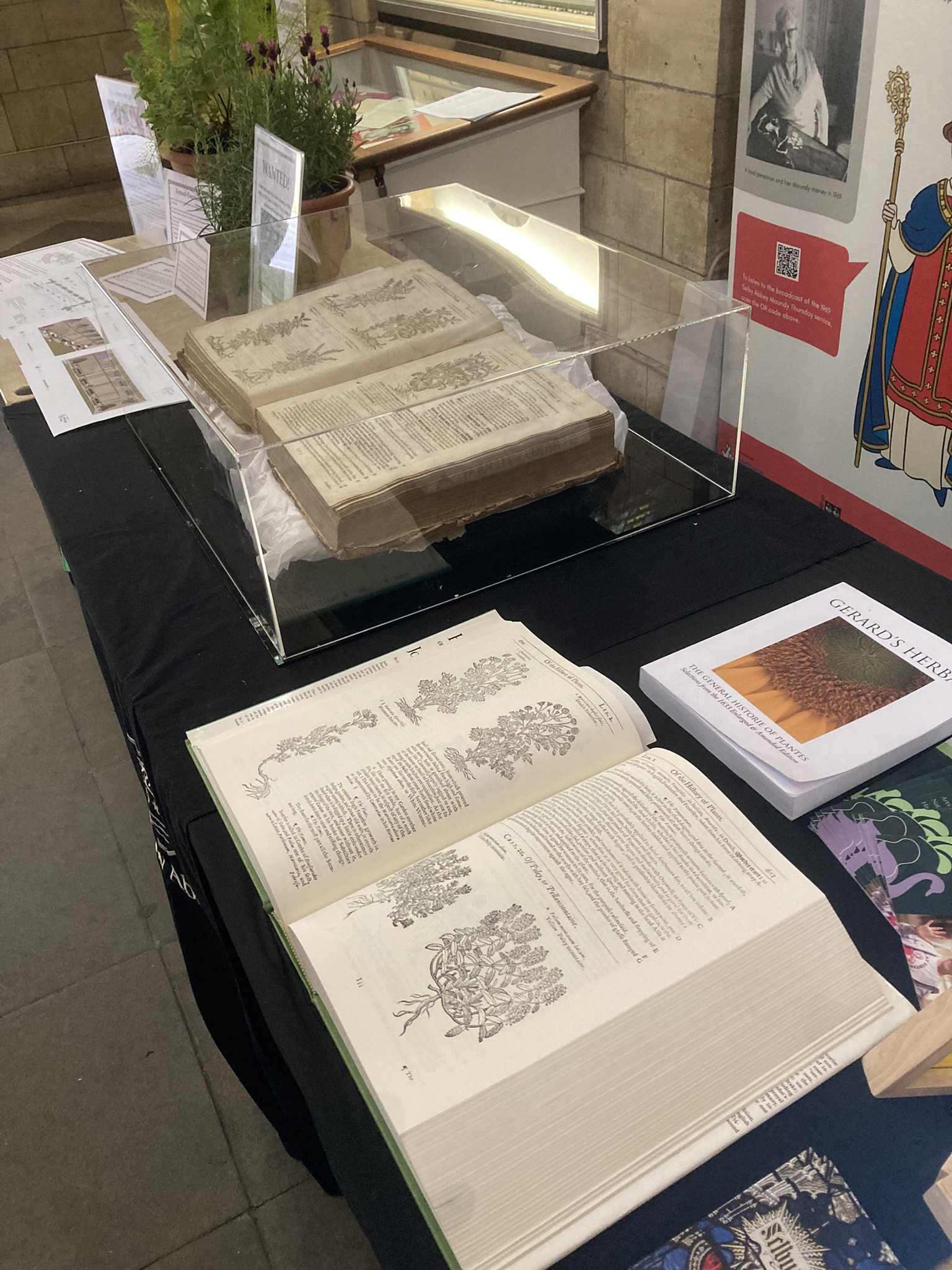
Evidence for gardening by the Selby Abbey monks is limited, but we do know that they had a garden they called ‘Herynghousgarth’. Hull History Centre holds a number of the monks’ surviving account rolls, handwritten documents on rolls of parchment which list expenses incurred in the course of a year. An entry by the Abbey’s kitchener, a monk in charge of the meals prepared in the kitchen and served in the refectory, mentions how a certain Roger Cooke was paid to dig the garden and plant herbs over three days in 1416-17.
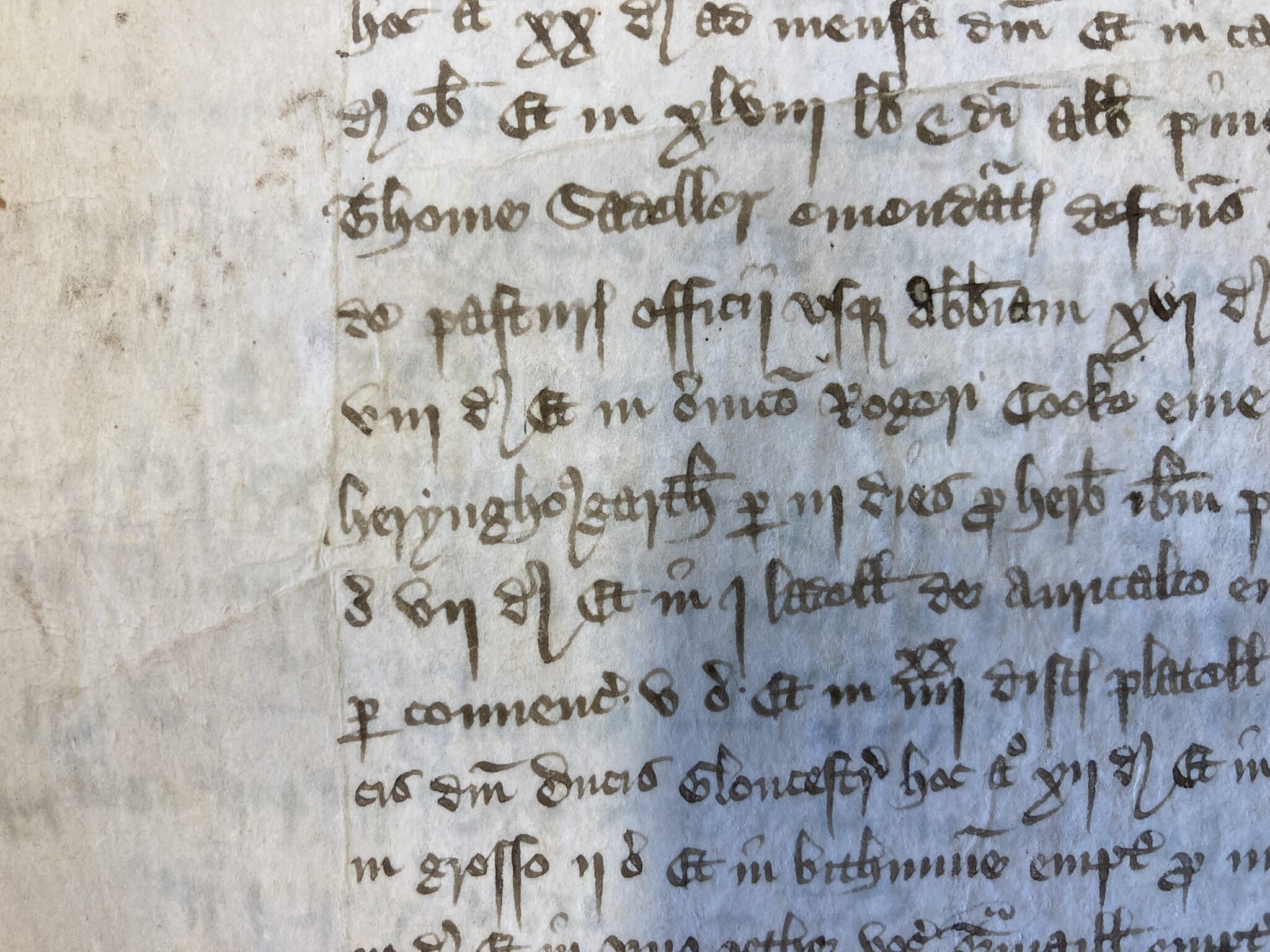
Image caption: ‘Herynghousgarth’ in the Kitchener’s Account Roll, 1416-17 (U DWE/2/10). Reproduced by permission of Hull History Centre and Westminster Diocesan Archives.
Other entries for the same year highlight how the monks’ own gardens weren’t enough to provide them with all of the vegetables they needed, with purchases of cabbages, leeks, garlic, onions, and white and green peas.
The monks were not exempt from manual labour, however, and may have carried out some of the gardening duties themselves. As their Rule makes clear:
‘Idleness is the enemy of the soul. Therefore, the brothers should have specified periods for manual labour as well as for prayerful reading.’
The Rule of St Benedict
A research grant from the Yorkshire Archaeological and Historical Society has allowed a member of the project team and the Abbey’s heritage volunteers to look into the ‘prayerful reading’ that may have taken place in the cloister. Very few books are known to have survived from the Abbey library, which was destroyed or dispersed during the Dissolution, so we know little about the monks’ reading habits. One book which has been connected with the Abbey, however, is currently kept at the Bodleian Library in Oxford, where it is known by its shelfmark: MS Fairfax 12. The grant paid for the project manager to travel to Oxford to view the manuscript and obtain some digital images of it for further research.
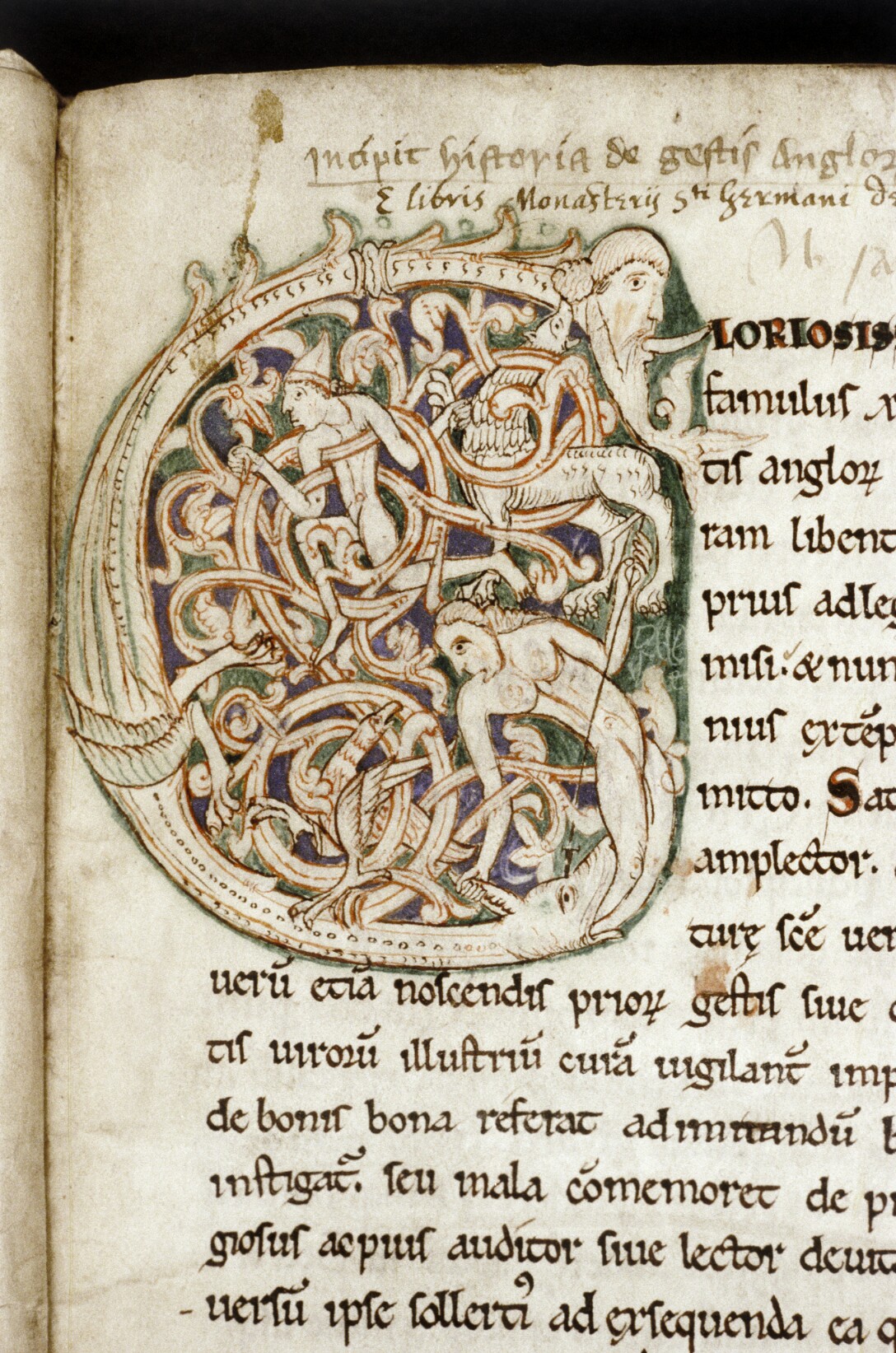
Image caption: A detail of MS Fairfax 12, fol. 4r. © Bodleian Libraries, University of Oxford. https://creativecommons.org/licenses/by-nc/4.0/
The contents of the book, a handwritten and beautifully decorated piece from the 12th century, are very interesting. Most of it is taken up with a copy of the Ecclesiastical History of the English People by the Venerable Bede, which contains an account of the mission to England by St Germain, to whom Selby Abbey is dedicated; might this be the reason why the monks had their own copy? The close inspection of medieval books can reveal clues as to how they were read, in the shape of annotations, or signs of heavy use in sections that were of particular interest to their owners. Our research into this fascinating book and others from the Abbey’s monastic library will continue, with our findings to be shared later in the project.
Another piece of research aimed at uncovering the Abbey’s monastic past has been a ground-penetrating radar survey by Reclaim Heritage, which was carried out in the southern half of the churchyard in June. This survey was aimed at mapping some of the remains of the monastic buildings last excavated by archaeologists in 1867, or known about from illustrations made before they were demolished earlier that century. We expect that the survey will uncover the traces of three structures in particular: these are (from west to east) the west range, the cloister and the chapter house.
The west range (also named the ‘Old Mount’ on a map of 1792) is likely to have contained the upstairs dormitory and abbot’s private chambers, with cellars below. The cloister has already been described above. The chapter house was the official meeting-place for monks, where they gathered to hear daily readings and discuss Abbey business.
‘As often as anything important is to be done in the monastery, the abbot shall call the whole community together and himself explain what the business is; and after hearing the advice of the brothers, let him ponder it and follow what he judges the wiser course.’
The Rule of St Benedict
The early signs from the GPR are promising: we aim to share the full results of the survey later this year!
In the meantime, you can find out more about ground-penetrating radar and its use at Selby Abbey in this short film:
Selby Abbey GPR Survey – Reclaim Heritage – YouTube
Excerpts from the Rule of St Benedict taken from Fry, Timothy, and others (eds), The Rule of St Benedict in English (The Liturgical Press, 1981).